GUIDED WALKS
Walks with Vicky
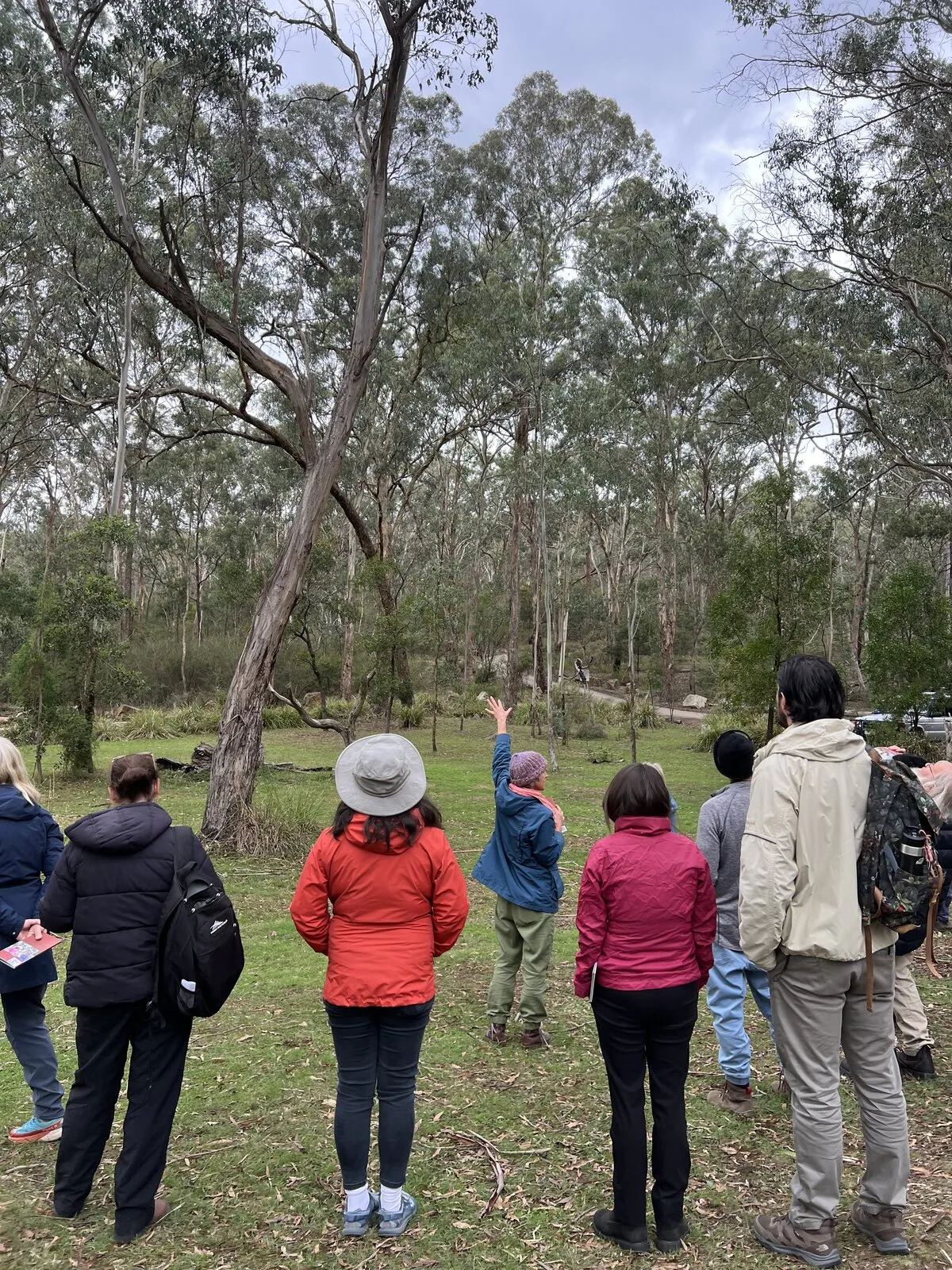
Step into the world of eucalypts and discover Melbourne through its most iconic trees.
Why these walks
Eucalypts are at the heart of the Australian landscape — remarkably diverse, deeply adapted, and culturally significant. With hundreds of species across Australia, each tree tells a story through its bark, leaves, scent, and form.
These guided walks offer a chance to slow down, look closely, and begin to recognise the subtle and striking differences between species that most people walk past every day.
Each walk is designed as an immersive, conversational experience. Whether you are a complete beginner or already have an interest in Australian plants, the walks are tailored to suit your level of knowledge and curiosity.
Vicky is an extremely knowledgeable, kind and generous educator. She explains the somewhat daunting (but exciting) task of eucalypt identification in a very accessible way, particularly with the help of her fantastic guide, ACE Guide to Eucalypts Melbourne. She clearly has a genuine love for eucalypts and made the day fun as well as informative. I highly recommend attending any events that she is facilitating.
What you'll learn
- Recognise different eucalypt species
- Read bark, buds, gumnuts and leaves as pieces of an identification puzzle
- Notice seasonal changes and how trees vary across the year
- Read the landscape through its trees
- Become more familiar with the ecosystems eucalypts support — birds, insects, possums, koalas, soil life and mycorrhizal activity
Deepen your connection to place by seeing what is usually overlooked.
A sample walk: Pound Bend
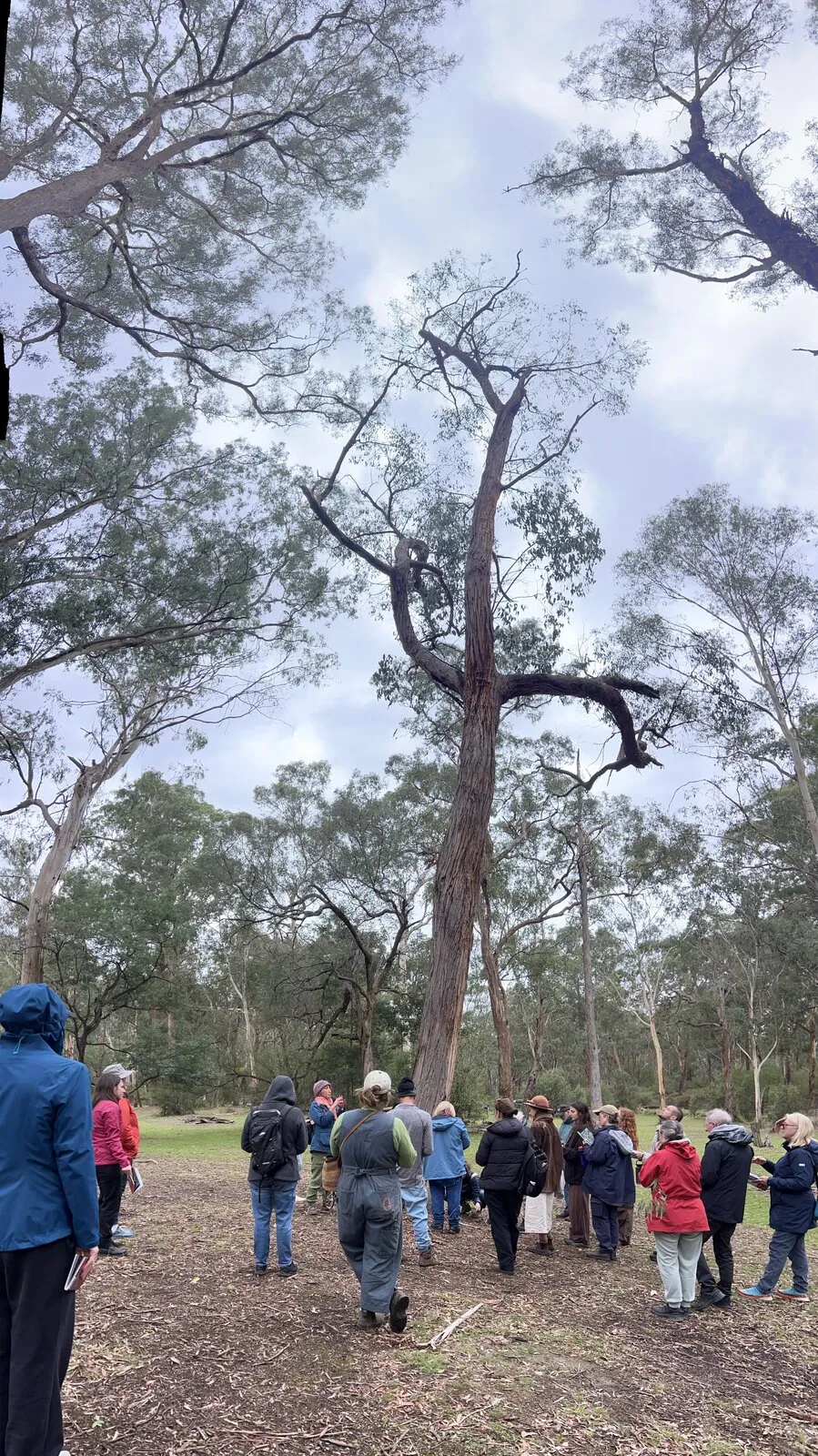
At Pound Bend you'll meet several different species in a short stretch — perfect for testing the identification machinery without being overwhelming. We watch the demeanour of each tree: the texture and shape, the size and form of fruits (champagne flute, thick-walled, conical), the buds, the bark.
Along the Yarra, the habitat shifts from riverine flats up the slope, and the trees change with it — a quick lesson in how eucalypts respond to their place. We make guesses, tie things together, and celebrate the tricky ones. It isn't about being right; it's about we are learning.
The longer we look, the more we understand — every walk is accessible to every level of knowledge. That's the joy of it: connecting more intimately with place.
Locations
Walks can be arranged at:
- Pound Bend (Warrandyte)
- Long Forest, Bacchus Marsh
- Blackburn Lake
- Royal Park
- Royal Botanic Gardens
Other Melbourne locations on request.
Practicalities
- Duration
- 90–120 minutes
- Group size
- Up to 30 people
- Pace and fitness
- Relaxed pace; suitable for most fitness levels
- Accessibility
- Wheelchair-accessible walks available with advance notice
- When
- Year-round
- Pricing
- From $500 per group · per-person pricing coming soon
Who these walks are for
- Community and interest groups
- Garden clubs and horticultural societies
- Schools and educational groups
- Corporate or team experiences
- Visitors wanting a uniquely Australian experience
About Vicky
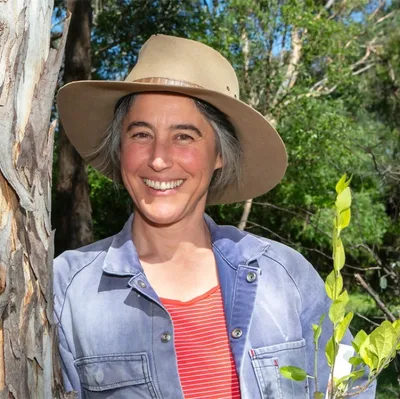
Vicky Shukuroglou is co-author and photographer of the ACE Guide to Eucalypts Melbourne, an artist and ecologist, and founder of Nillumbio — a biodiversity-focused engagement practice through which she has led many walks.
What people say
Vicky really helped me see the important details and understand the differences between the trees. I feel so much more confident now.
Vicky's approach is holistic and generous. She shares her understanding of ecology and human connection in ways that are deeply felt and accessible.
Also available
- Gift vouchers
- Schools program (coming soon — contact for more information)
- Custom themes for community or corporate groups
Booking enquiries
If you're interested in organising a walk, Vicky would be delighted to hear from you. Tell her about your group, where you'd like to walk, when, and what you're hoping for.
Acknowledgment of Country
The eucalypts in this guide grow on the lands of the Wurundjeri Woi-wurrung, Bunurong/Boon Wurrung and Wadawurrung/Wathaurong peoples of the Eastern Kulin Nation. These trees and their connected environments have been known, named, and cared for by Aboriginal people for tens of thousands of years. We pay our respects to Elders and all communities in care of Country. We acknowledge that sovereignty was never ceded.